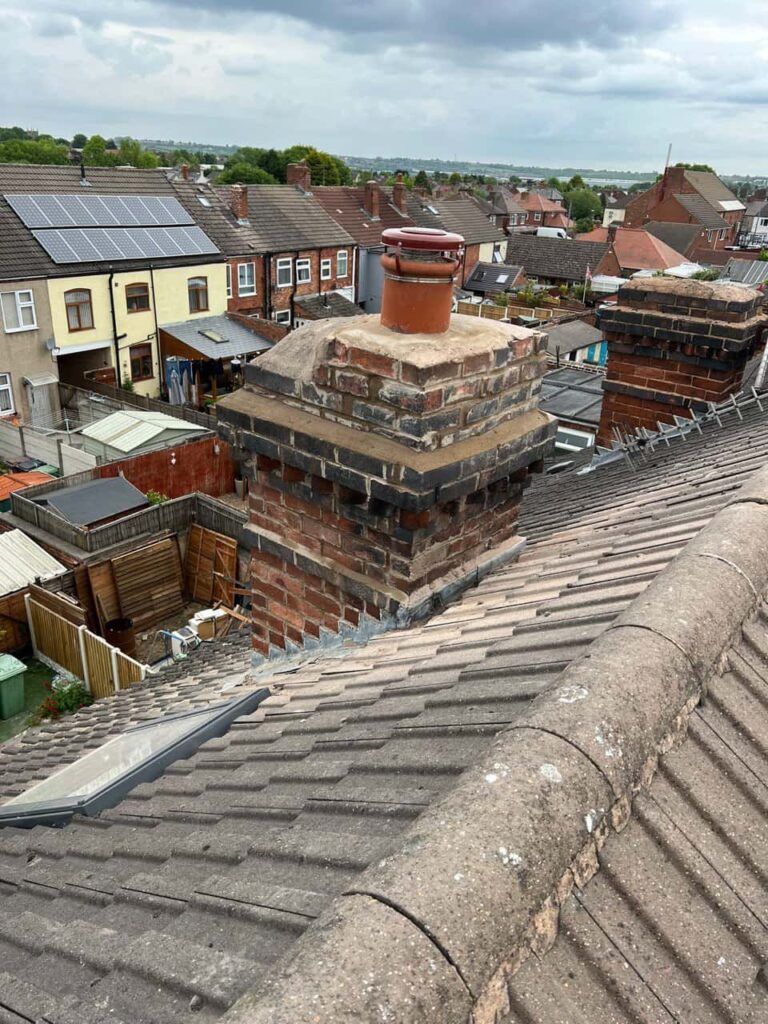
A damp patch on a ceiling may appear to identify the position of a roof leak, but water rarely follows a simple vertical route. It can enter through one part of the roof, travel across concealed materials and become visible several metres away.
This makes accurate roof leak detection more complicated than finding the nearest damaged tile. For homeowners in Kirkby in Ashfield, Derbyshire, understanding these difficulties explains why professional diagnosis is important before repair work begins.
Why Finding the Source of a Roof Leak Can Be Difficult
1. Water Can Travel Beneath the Roof Covering
Rainwater entering through a cracked tile or open joint may run down the underlay before reaching a tear, fixing hole or roof junction. It can then drip into the roof space at a location far below the original opening.
As a result, the damp patch inside the property may show where the water finished travelling rather than where it entered. Repairing the roof directly above the visible stain may leave the actual defect unresolved.
2. Roof Timbers Can Redirect Moisture
Once water enters the roof space, rafters, battens and other surfaces can redirect its path. Moisture may follow a timber, collect at a joint and eventually drip onto insulation or a ceiling.
This movement can make a leak appear to come from a different roof slope or a nearby junction. Water marks on timber can help trace the route, but older staining may relate to a previous problem rather than the current leak.
3. Leaks May Occur Only in Particular Weather
Some roofing defects allow water in only when the rain is heavy, prolonged or driven from a certain direction. Light rainfall may run safely over the same area without exposing the weakness.
Wind can push water beneath displaced tiles, lifted flashing or poorly sealed junctions. By the time an inspection takes place, the surface may have dried and the entry route may no longer be obvious.
Recording when a leak appears can provide useful clues about the affected area.
4. Small Defects Can Be Difficult to See
A slightly displaced tile, narrow split in felt or small crack in flashing can admit water without creating an obvious opening. From ground level, the roof may appear complete and secure.
Close inspection may be needed to identify:
- Fine cracks in tiles or slates
- Failed fixings or weakened battens
- Small gaps around flashing
- Deteriorated mortar at ridges and verges
- Open seams on flat roofing
- Damage beneath overlapping materials
The size of the visible defect does not always reflect the amount of moisture it can admit.
5. Several Components Meet at Vulnerable Junctions
Chimneys, valleys, abutments and roof edges contain overlapping materials that must work together to keep water out. A problem in any one component can produce similar internal symptoms.
Dampness near a chimney, for example, might result from flashing, mortar joints, nearby tiles or water travelling from higher on the roof. Focusing on the most visible gap without checking the complete junction can lead to an incomplete repair.
6. More Than One Defect May Be Present
Older or weathered roofs can develop several weaknesses at the same time. One leak may come from a slipped tile, while another is caused by deteriorated underlay or damaged flashing.
Repairing the first defect found may reduce the water ingress without stopping it completely. This can create the impression that the repair has failed when another entry point remains active.
A methodical inspection considers the surrounding roof rather than assuming that one visible defect explains every sign of dampness.
7. Internal Moisture Is Not Always Directly Below the Roof Fault
Insulation can absorb and spread water before it reaches the ceiling. Vapour, condensation and previously damp materials may also complicate the visible pattern.
A ceiling stain can continue changing after the immediate leak has stopped because retained moisture still needs to dry. The contractor must distinguish between active water entry, residual dampness and other sources of moisture before recommending repairs.
How a Professional Roofer Investigates a Leak
Professional roof leak detection involves assessing the roofing system as a whole. The inspection may include the external covering, flashing, valleys, ridges, underlay, roof space and visible drainage routes.
The roofer will consider:
- Where and when internal dampness appears
- The direction of the roof slope
- Weather conditions associated with the leak
- Water marks on underlay and timbers
- The condition of tiles, fixings and battens
- Vulnerable junctions near the affected area
- Evidence of earlier repairs
Combining these observations helps establish the most likely entry point and reduces the risk of repairing the wrong section.
Why Guesswork Can Lead to Recurring Leaks
Applying sealant or replacing the nearest tile may occasionally stop a straightforward leak, but guesswork can also conceal the symptom without correcting its cause. If water is entering higher up the roof or through another component, the dampness is likely to return.
Accurate diagnosis allows the repair to address the failed material and any related damage. This provides a more dependable result than repeatedly patching different areas without understanding how the water is travelling.
Conclusion
Roof leaks are difficult for homeowners to diagnose because water moves beneath coverings, follows structural materials and may enter only during specific weather conditions. Small defects, complex junctions and multiple entry points can make the visible damp patch misleading.
Kirkby in Ashfield Roofing Repairs provides professional roof leak detection and repair services in Kirkby in Ashfield, Derbyshire. If dampness is appearing inside your property, contact our team to arrange an inspection and identify the source before the problem develops further.
Call us on: 01623 700 893
Click here to find out more about Kirkby in Ashfield Roofing Repairs
Click here to complete our contact form and see how we can help with your roofing needs.