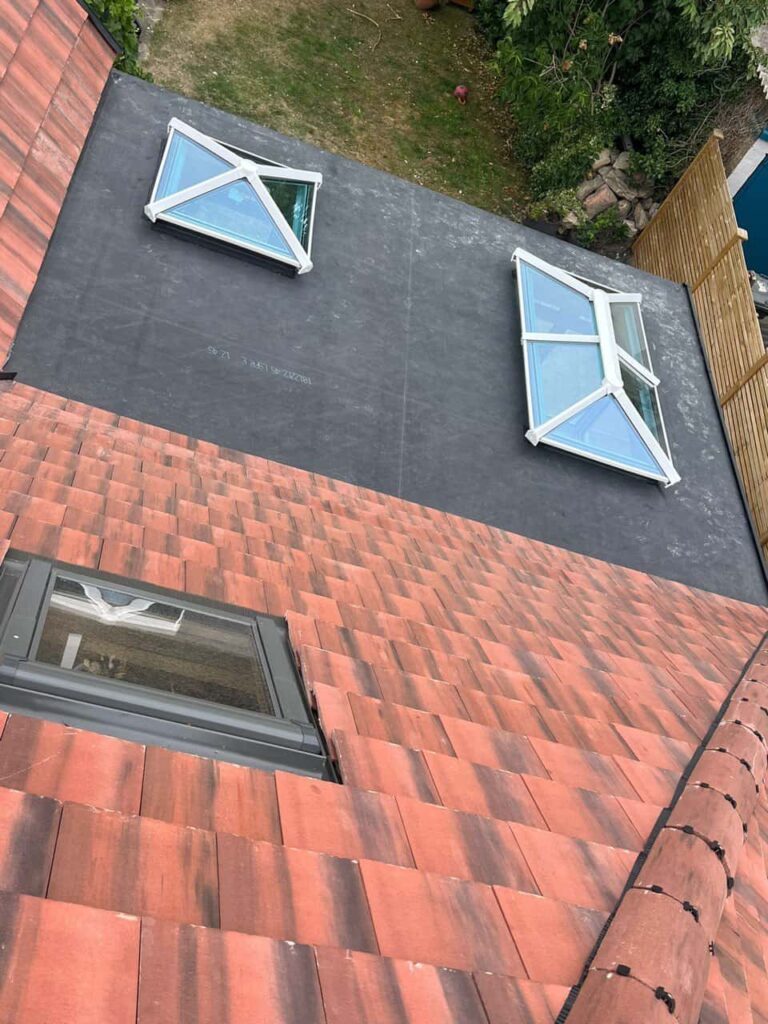
Liquid roof covering can provide a seamless and highly effective waterproof finish, particularly on flat and low-pitched roofing systems. However, its long-term performance depends heavily on the condition of the roof beneath it. Applying a new coating over unresolved defects does not make those problems disappear. Damage, trapped moisture, unstable materials and poor drainage should all be investigated before the liquid system is applied.
At Kirkby in Ashfield Roofing Repairs, we provide professional roofing services throughout Kirkby in Ashfield, Derbyshire. Careful preparation is central to successful liquid roof covering because the finished system can only perform properly when the underlying roof is suitably prepared, stable and free from defects that could compromise the new surface.
Why Roof Preparation Matters
Liquid roofing systems are designed to create a continuous waterproof layer across the prepared surface. This makes them particularly useful around details, junctions and other areas where traditional sheet materials can require multiple seams.
However, a liquid covering should not be regarded as a way of simply hiding deterioration.
Before application, the existing roof needs to be assessed for:
- Structural stability
- Existing leaks
- Damaged roofing materials
- Trapped moisture
- Cracks and openings
- Drainage problems
- Defective roof details
Addressing these issues first creates a sound foundation for the new covering.
Existing Roof Leaks
Any known leak should be investigated before liquid roofing work begins. Finding the source is particularly important because water does not always enter directly above the location where dampness becomes visible internally.
Moisture can travel beneath existing roofing materials before appearing elsewhere.
A professional inspection should establish:
- Where water is entering
- How far moisture has travelled
- Whether underlying materials are affected
- What repairs are required before coating
Applying liquid covering without investigating an existing leak risks leaving concealed deterioration beneath the new surface.
Damaged or Unstable Roof Decking
The roof deck provides the structural surface supporting the roofing system. If sections are weakened, damaged or unstable, they need attention before a new liquid covering is installed.
Signs that the deck may require investigation include:
- Noticeable movement underfoot
- Soft areas
- Uneven sections
- Visible deterioration
- Localised sagging
A waterproof covering cannot compensate for an unsound substrate. The supporting surface must be capable of providing a stable base.
Trapped Moisture
Moisture already present within the existing roof construction is another issue that should not simply be sealed beneath a new covering.
Where there are indications of persistent water ingress or damp roofing materials, the extent of the problem should be established first.
Appropriate preparation helps ensure the liquid roof covering is applied to a suitable surface rather than trapping an unresolved moisture problem beneath it.
Cracks and Surface Defects
Existing cracks, splits and damaged sections need to be repaired appropriately before the main liquid covering is applied.
Particular attention should be given to:
- Cracks in the existing surface
- Open joints
- Blisters
- Loose materials
- Damaged edges
- Previous failed repairs
The objective is to create a sound and properly prepared substrate that allows the new system to form a consistent protective layer.
Poor Previous Repairs
Flat roofs sometimes accumulate multiple repairs over their lifetime. Different materials may have been added to stop leaks temporarily, leaving an irregular surface with patches that are no longer securely bonded.
Before applying liquid roofing, previous repairs should be assessed to determine whether they remain suitable.
Loose or deteriorated materials may need to be removed or corrected so that the new covering is not relying on an unstable layer beneath it.
Ponding and Drainage Problems
Water should be able to leave a roof efficiently. If significant puddles remain after rainfall, this may indicate problems with roof falls, outlets or localised settlement.
Simply coating over an area where water repeatedly collects does not address why the ponding is occurring.
Before applying liquid roof covering, it is important to inspect:
- Roof falls
- Drainage outlets
- Gutters
- Low spots
- Areas of settlement
Correct drainage supports the performance of the entire roofing system.
Defective Flashing and Roof Junctions
Roof edges, upstands and junctions are common areas for water ingress because different surfaces and materials meet at these points.
Before liquid roofing is applied, these details should be inspected carefully.
Potential problems include:
- Loose flashing
- Open junctions
- Cracked detailing
- Deteriorated seals
- Movement around upstands
Correct preparation around these vulnerable areas is essential for creating a continuous waterproof finish.
Damaged Roof Edges
The perimeter of a flat roof deserves particular attention because poor detailing around edges can allow water to penetrate beneath the covering.
Loose trims, damaged materials or deteriorated edge details should be repaired before the liquid system is installed.
A professionally completed roof should provide continuity across the main surface and around its perimeter rather than relying solely on the central covering.
Loose and Contaminated Surfaces
Successful liquid roof application also depends on good adhesion. Dirt, dust, moss, loose material and other contamination can interfere with the bond between the coating and its substrate.
Preparation may therefore involve:
- Removing loose debris
- Cleaning the surface thoroughly
- Treating appropriate areas
- Removing unstable materials
- Allowing the substrate to reach the required condition before application
Surface preparation should follow the requirements of the particular liquid roofing system being installed.
Why Covering Over Problems Is a False Solution
One of the most important principles of liquid roofing is that the coating should be the final waterproofing stage, not a substitute for necessary repairs.
Covering unresolved deterioration can leave defects hidden beneath the finished surface. The roof may initially look improved while the underlying problem remains.
Professional preparation instead focuses on the sequence:
- Inspect the roof.
- Identify existing defects.
- Determine their underlying causes.
- Repair unsuitable areas.
- Prepare the complete surface.
- Apply the liquid roofing system correctly.
This approach provides a much stronger basis for dependable long-term performance.
Why Professional Assessment Matters
Not every existing roof is automatically suitable for liquid covering without preparation. The type and condition of the substrate, existing roofing materials and individual roof details all influence what work is required.
An experienced roofer can assess the complete roof and determine whether repairs are necessary before application begins.
This prevents the new covering from being used merely to conceal defects and ensures the work addresses the actual condition of the roof.
Why Choose Kirkby in Ashfield Roofing Repairs?
At Kirkby in Ashfield Roofing Repairs, we provide professional roof repairs, liquid roof covering and comprehensive roofing services throughout Kirkby in Ashfield, Derbyshire.
Our approach begins with understanding the condition of the existing roof. We identify leaks, deterioration and other defects before preparing the surface appropriately for the intended roofing system. This attention to preparation helps create a reliable foundation for high-quality liquid roofing work and lasting weather protection.
Conclusion
Liquid roof covering can provide an effective, seamless waterproof surface, but successful installation begins long before the coating itself is applied. Existing leaks, damaged decking, trapped moisture, cracks, failed previous repairs, poor drainage and defective roof details should all be investigated and corrected where necessary.
Applying a liquid system over unresolved problems may hide deterioration rather than solve it. Proper inspection, repair and preparation ensure the new covering is installed onto a sound surface capable of supporting its long-term performance.
If you are considering liquid roof covering for a property in Kirkby in Ashfield, Derbyshire, Kirkby in Ashfield Roofing Repairs can assess the existing roof and determine what preparation is required. Contact our team to arrange a professional inspection and ensure your liquid roofing project starts with the right foundations.
Call us on: 01623 700 893
Click here to find out more about Kirkby in Ashfield Roofing Repairs
Click here to complete our contact form and see how we can help with your roofing needs.