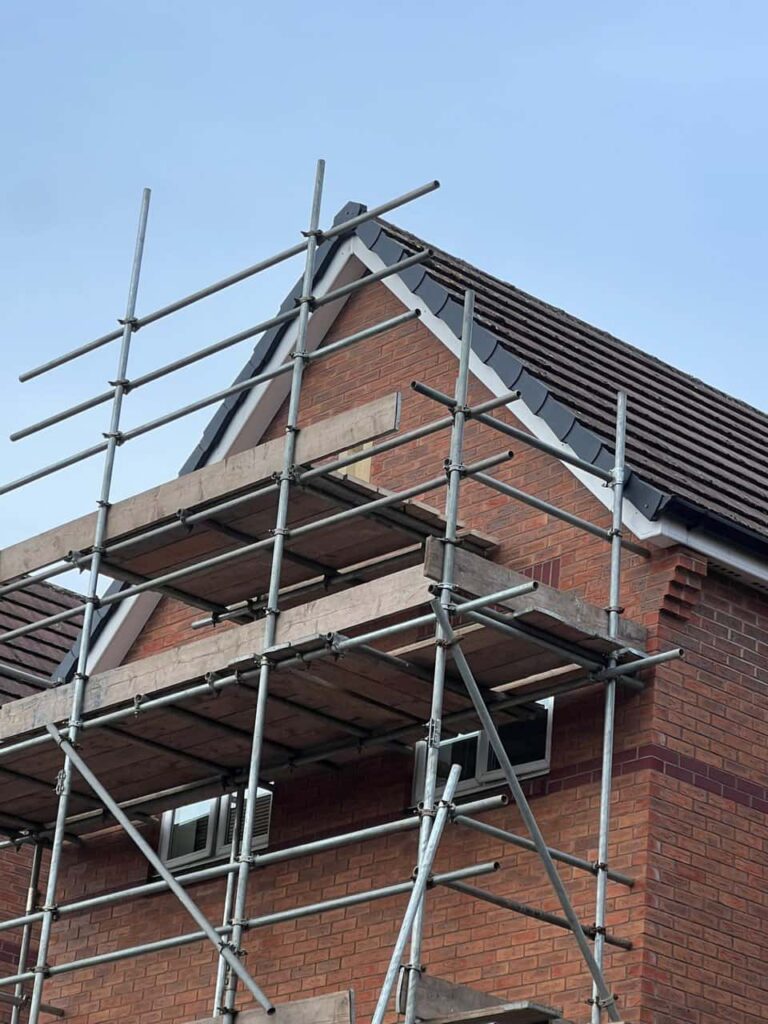
Individual roof repairs are often the correct response to isolated damage. A cracked tile, a small section of failed flashing or a localised flat roof defect does not automatically mean that extensive work is required. However, when repairs begin forming a pattern, continuing to treat each problem separately may no longer provide a dependable result.
For property owners in Alfreton, Nottinghamshire, the key is to consider where defects are appearing, how often they return and what condition surrounds each repaired area. This can reveal whether the roof needs a wider repair programme or a more comprehensive solution.
Signs That Isolated Roof Repairs May No Longer Be Enough
The number of previous repairs matters less than the reason they were needed. Several unrelated incidents can occur on a sound roof, while a small number of recurring defects may expose a more significant weakness.
The Same Area Keeps Developing Problems
If a leak or visible defect repeatedly returns in one location, the original cause may not have been fully identified. Water can enter through one point before travelling along underlay, battens or timbers and appearing elsewhere.
Repeated problems around the same feature may indicate:
- Deteriorated underlay beneath the tiles
- Damaged or weakened battens
- Failed flashing around a chimney or wall
- A defective valley or roof junction
- Movement in the supporting structure
- An ineffective drainage detail
- Widespread failure around an earlier patch
The surrounding area should be opened or inspected as necessary so that the source can be confirmed rather than inferred from the internal damp mark.
New Defects Are Appearing Across Different Roof Slopes
A series of problems in unrelated locations can indicate that materials installed at a similar time are deteriorating together. Tiles, slates, fixings and mortar may all have experienced the same years of weather exposure.
Warning signs include slipped coverings on more than one slope, cracked tiles across the roof and several areas of failing ridge or verge material. In this situation, repairing only the latest visible defect may leave other weakened components untouched.
Each Repair Joins Onto Ageing Material
A local repair can be sound while the materials beside it continue to decline. This is particularly common where new flashing, felt or tiles have been connected to an older surface that has lost strength or flexibility.
If fresh defects keep forming at the edges of earlier repairs, the transition between old and new materials should be examined. A wider repair may be needed to reach a section that still provides a reliable connection.
Roof Leaks Are Becoming More Frequent
Leaks that begin appearing after increasingly minor rainfall can suggest that the roof’s weather resistance is declining. What once required severe wind-driven rain may later occur during ordinary wet weather.
Increasing frequency may point to:
- Multiple openings in the roof covering
- Ageing underlay that no longer redirects water
- Separated flat roof joints
- Porous or damaged masonry
- Deteriorated leadwork
- Drainage that cannot clear water effectively
The timing and weather conditions associated with each leak can help a roofer identify a pattern.
Several Roofing Components Are Deteriorating Together
A roof functions as a complete system. Its coverings, battens, underlay, flashing, ridges, valleys and drainage details all contribute to weatherproofing.
Broader work may be appropriate when several of these components show significant wear at the same time. Examples include loose tiles combined with damaged underlay, or failing mortar alongside defective flashing and cracked chimney masonry.
Addressing connected problems together can produce a more coherent repair than treating each component during a separate visit.
Repairs Are Concentrated Around Junctions
Roof junctions handle water flowing from different surfaces and are often more complex than open roof slopes. Valleys, chimneys, rooflights, dormers and wall abutments can all become recurring problem areas.
Several repairs around one junction may indicate that the complete detail needs to be reconstructed. Applying another surface patch may not resolve issues with the materials, alignment or drainage beneath it.
The Roof Surface Has Become Uneven
Sagging, dipping or widespread distortion should not be treated as a cosmetic issue. Movement at the surface can indicate deterioration within battens, decking or supporting timbers.
Other signs of possible underlying movement include:
- Uneven rows of tiles or slates
- Flat roof areas holding standing water
- Soft sections beneath the covering
- Cracks repeatedly forming along the same line
- Changes in the roofline
- Internal ceilings beginning to distort
Broader assessment is necessary before further surface repairs are completed.
Flat Roof Patches Cover an Increasing Area
Patching can be effective when a flat roof defect is small and the surrounding membrane remains sound. Its value decreases when patches overlap, seams continue to separate or the covering becomes brittle across large areas.
A wider repair or new system may need consideration when moisture is trapped below the membrane, the deck has weakened or several parts of the roof are deteriorating simultaneously.
The Roof’s Repair History Shows a Clear Trend
A simple repair record can help distinguish isolated incidents from progressive decline. Record the date, location, symptoms and type of work completed for each problem.
The history may reveal that:
- Defects are becoming more frequent
- Repairs are moving across the roof
- Dampness returns after similar weather
- Several faults involve materials of the same age
- New problems form beside previous repairs
This information gives a roofer valuable context when assessing the roof as a whole.
Broader Work Does Not Always Mean Full Replacement
A wider solution can take several forms. It may involve renewing one roof slope, rebuilding a defective junction, replacing a deteriorated section of underlay or completing coordinated repairs across several connected areas.
Full replacement is generally considered when deterioration is widespread and too little reliable material remains for local repairs to integrate effectively. The decision should be based on the roof’s actual condition rather than its age or number of repairs alone.
Arrange a Complete Roof Assessment
When a pattern becomes apparent, the inspection should extend beyond the latest defect. It should consider:
- The condition of all roof coverings
- Fixings, battens and accessible underlay
- Flashing and roof junctions
- Ridges, hips, valleys and verges
- Flat roof seams, edges and drainage
- Chimney masonry and weatherproofing
- Gutters, outlets and downpipes
- Previous repairs and adjacent materials
- Signs of moisture or movement inside the roof space
This broader view allows the scope of work to be matched to the cause and extent of deterioration.
Conclusion
A pattern of recurring leaks, defects across several areas, failing junctions or repairs adjoining weakened materials can suggest that broader roof work is needed. This does not automatically mean replacing the entire roof, but it does mean that another isolated patch may be insufficient.
Alfreton Roofing Repairs provides professional roof inspections and repairs in Alfreton, Nottinghamshire. If faults continue to appear or earlier repairs are no longer delivering reliable results, contact our team to arrange a complete assessment and determine the appropriate scope of work.
Call us on: 01623 700 893
Click here to find out more about Kirkby in Ashfield Roofing Repairs
Click here to complete our contact form and see how we can help with your roofing needs.