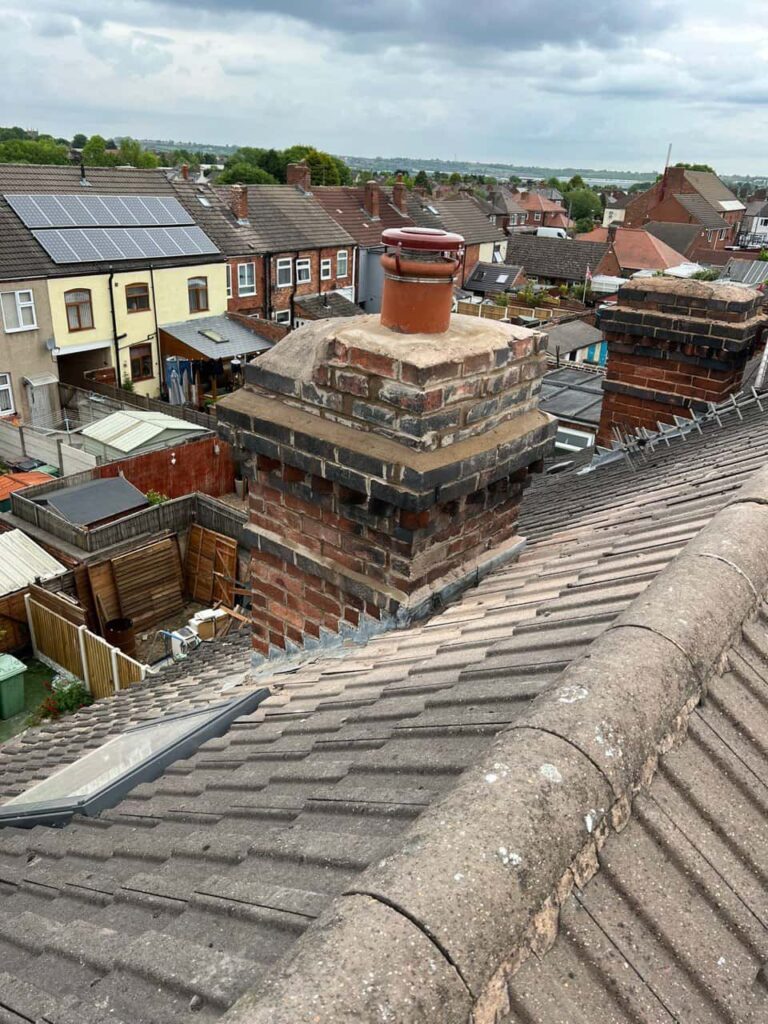
A cracked or missing roof slate may appear to be a small defect, but it can leave the layers beneath your roof exposed to rain and wind. Once moisture reaches the underlay, battens or roof timbers, the problem may spread beyond the original damaged area.
Prompt professional attention can often resolve localised slate damage without disturbing the wider roof. The key is to identify why the slate failed, check the surrounding materials and complete a repair that integrates securely with the existing covering.
What Should You Do If a Roof Slate Is Damaged?
If you notice a cracked, slipped or missing slate, avoid climbing onto the roof or attempting to secure it yourself. Slate can be slippery and brittle, while nearby slates may already have weakened fixings.
Inspect the roof from ground level where possible and look for additional warning signs, including:
- Pieces of slate on the ground
- An uneven gap within the roof covering
- Damp patches on ceilings or walls
- Water marks inside the loft
- Daylight visible through the roof
- Several surrounding slates appearing loose or misaligned
Move items away from any internal damp area and arrange an assessment before further weather enlarges the defect.
Why Do Roof Slates Crack or Go Missing?
Natural slate is durable, but individual pieces can still become damaged. Common causes include strong winds, impact from falling debris, weathered fixings and movement within the roof structure.
A slate may also fail if it was previously cut incorrectly, fixed too tightly or installed with insufficient overlap. In some cases, the visible damage is only part of the problem. Corroded nails or deteriorated battens can allow otherwise sound slates to slip out of position.
Identifying the cause matters because simply inserting another slate will not provide a reliable repair if the supporting materials remain defective.
Can One Damaged Slate Be Replaced?
A single cracked or missing slate can often be replaced when the surrounding roof remains secure. The damaged piece is carefully removed before a suitable replacement is positioned with the correct headlap and fixing method.
The replacement must sit evenly with the neighbouring slates and maintain the roof’s intended drainage pattern. A poor fit can create gaps, direct water beneath adjacent slates or place unnecessary pressure on the surrounding covering.
Matching the size, thickness and appearance of the existing slate also helps preserve a consistent finish.
Why Should the Surrounding Slates Be Checked?
Damage rarely occurs in complete isolation. The same weather conditions or fixing deterioration that affected one slate may have weakened others nearby.
A professional inspection should check for:
- Hairline cracks that are difficult to see from below
- Loose or corroded fixings
- Slates beginning to slide
- Chipped corners and edges
- Inadequate overlaps
- Damaged underlay or battens
- Movement around ridges, valleys and roof junctions
Checking the surrounding area reduces the likelihood of another slate failing soon after the original repair.
What Happens If a Missing Slate Is Left Unrepaired?
A missing slate creates a direct weakness in the roof covering. Wind-driven rain can pass through the opening and spread beneath neighbouring slates before becoming visible inside the property.
Over time, repeated moisture exposure may affect the underlay, timber battens, insulation and interior finishes. Dampness can also travel along roof timbers, meaning the internal mark may appear some distance from the missing slate.
Delaying attention may therefore turn a straightforward local repair into a wider roofing problem.
Does Internal Damp Always Appear Immediately?
Not necessarily. The underlay beneath the slates may initially redirect some moisture towards the eaves, delaying obvious internal symptoms. Water may also enter only when rain arrives from a particular direction.
For this reason, the absence of a ceiling stain does not mean a cracked or missing slate can be ignored. Visible external damage should be assessed before moisture has time to affect the roof structure.
Why Professional Slate Repair Matters
Slate roofing requires careful handling. Walking in the wrong place can crack additional slates, while unsuitable fixings or poorly positioned replacements may compromise the repair.
An experienced roofer can determine whether the defect is confined to one slate or connected to wider deterioration. Professional work also ensures that the replacement is correctly sized, securely fixed and aligned with the surrounding roof.
For properties in Kirkby in Ashfield, Derbyshire, this provides a more dependable solution than treating only the most obvious symptom.
Conclusion
A cracked or missing slate should be repaired promptly, even when no internal leak is visible. Localised damage can often be corrected successfully, provided the cause is identified and the nearby slates, fixings and supporting materials are checked at the same time.
If you have noticed a damaged or displaced slate, contact Kirkby in Ashfield Roofing Repairs to arrange a professional assessment. Our team can identify the extent of the problem and complete the appropriate slate roof repair without recommending unnecessary work.
Call us on: 01623 700 893
Click here to find out more about Kirkby in Ashfield Roofing Repairs
Click here to complete our contact form and see how we can help with your roofing needs.